UAE Heavy Industrial & Logistics Capacity Report 2026-2028
Quick orientation. Expanding metals, polymers, automotive, or heavy 3PL operations into the UAE requires a shift away from square-foot pricing. In the 2026 market, capacity deployment depends on secured grid power, registered rights in rem, and direct multi-modal freight connectivity.
Standard market listings across the seven Emirates often hide critical operational risks. For heavy industrial users, the key issue is not whether a warehouse exists on paper. The issue is whether the site has enough power, legal title structure, engineering capacity, and freight access to support production from day one.
Below is the operational data, statutory fee structure, and infrastructure reality shaping UAE industrial setup decisions for the 2026-2028 cycle.
1. The Power Infrastructure Gridlock
The main operational failure for international manufacturing setups during the first 90 days is grid connectivity.
Standard Light Industrial Units (LIUs) across Dubai and the Northern Emirates usually carry a base allocation of 10 kW to 74 kW. Heavy industrial processes and heavy machinery operations require a minimum continuous load of 200 kW to 1+ MW from day one.
Grid upgrade timelines and scalability:
- Infrastructure wait times: Securing an additional 500 kW to 1 MW from local utility providers requires a formal Load Feasibility Study. Because of localized substation caps, physical grid integration and transformer installation delays range from 6 to 12 months from contract signing.
- Operational expense volatility: Utility tariff structures vary significantly between Emirates, directly changing long-term cost models.
Utility tariff framework, verified 2026 rates:
- DEWA, Dubai Mainland: Industrial Slab 4 above 6,000 kWh/month at AED 0.380/kWh plus AED 0.060 fixed fuel surcharge
- ADDC, Abu Dhabi KEZAD/ICAD: Verified industrial account at AED 0.150/kWh flat rate, no progressive slabs
- ADDC, Abu Dhabi: Industrial setup below 1 MW at AED 0.286/kWh standard non-incentivized rate
- SEWA, Sharjah HFZA/SAIF: Commercial/industrial high slab at AED 0.380/kWh plus AED 0.060 fixed fuel surcharge
- EtihadWE, Northern Emirates: Major Industrial Incentive Program at AED 0.260/kWh, valid for consumption above 10,000 MWh
2. Legal Architecture: Leasehold vs. Musataha Rights
Foreign entities face distinct legal realities regarding land tenure. True freehold land ownership for heavy industrial use is restricted to UAE and GCC nationals. Foreign industrial operations must use either standard commercial leasehold or a Musataha framework.
The Risk of Reversionary Rights
Standard leasehold agreements represent personal contractual obligations, or rights in personam. They frequently include structural alteration limits and absolute reversionary rights clauses.
Upon lease expiry, all built assets, modifications, and permanently installed industrial plant equipment can revert to the free zone authority or landlord at zero compensation. Local UAE commercial banks also do not issue project financing or asset-backed loans against standard short-term leaseholds.
The Musataha Statutory Alternative
A Musataha agreement establishes a registered real property right, or right in rem, over the land for a duration up to 50 years. Regulated under emirate-level decrees and managed through official platforms such as Land Departments or the Dari system in Abu Dhabi, it grants the investor ownership of buildings and structural improvements.
Financing: Musataha titles are bankable, transferable, and legally recognized as valid security for project debt under the Mortgage of Immovable Property Act.
Transaction fees: Registration fees are regulated by land authorities.
Statutory transaction fee matrix:
- Musataha registration, Dubai DLD: 1.0% of total contract value
- Long-term leasehold, Dubai DLD: 4.0% of total rental value
- Musataha registration, Abu Dhabi DMT: 4.0% of total Musataha value
- Lease transfer fee, Abu Dhabi DMT: 3.6% of total contract value
- Sublease permit fee, JAFZA: AED 20,000 fixed annual fee
- Mortgage registration fee, JAFZA: 0.12% of total debt facility
3. Freight Integration: Etihad Rail Commercial Parameters
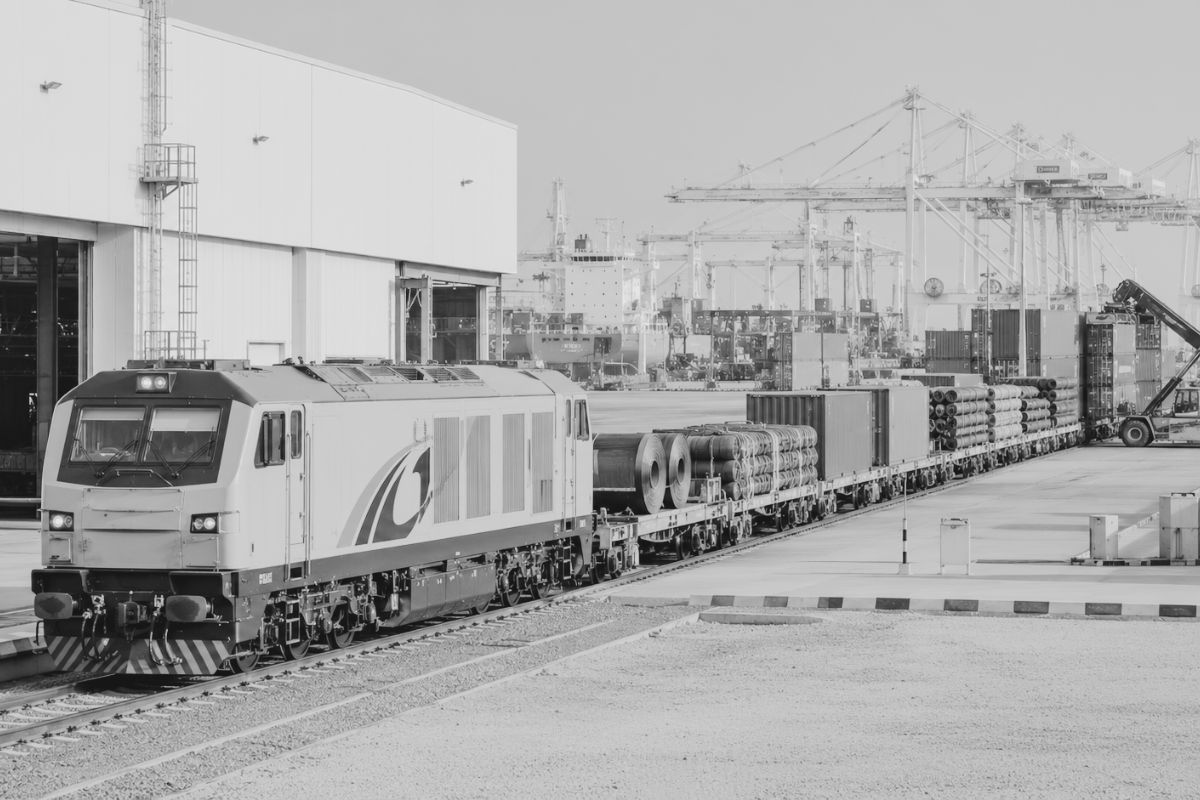
The UAE national freight network managed by Etihad Rail extends across 900 kilometers from Ghuweifat to Fujairah. It operates on industrial logistics parameters that directly affect supply chain cost models for non-food commodities.
Heavy haul technical capacity: The rail network operates at an axle load configuration of 32.5 tonnes, engineered for high-density bulk materials including structural steel, scrap metal, industrial polymers, clinker, and aggregate components.
The road freight premium: Facilities outside the functional radius of active rail terminals or dry ports, such as ICAD or Al Faya, face structural road transport costs. These include local transit permits, road tolls such as Salik and Darb, axle load limits on truck routes, and exposure to diesel price volatility.
4. The Abu Dhabi Industrial Arbitrage
Q1 2026 market reviews indicate that prime industrial submarkets in Dubai, including JAFZA, Al Quoz, and DIP, have reached occupancy levels between 95% and 98%. This supply compression has pushed Grade A asking rents in prime Dubai free zones to AED 40.0 to AED 45.0 per square foot.
This compression has redirected heavy industrial capital toward Abu Dhabi’s primary industrial zones, specifically KEZAD and ICAD.
Abu Dhabi industrial performance indicators, Q1 2026:
- Total active warehouse portfolio: More than 9.12 million sq.ft. (848,000 sqm)
- Portfolio occupancy rate: 97.0% to 98.0% stabilized
- KEZAD ICAD Grade A base rent: AED 51.1/sq.ft. converted from AED 550/sqm
- KEZAD Al Ma’moura base rent: AED 39.5/sq.ft. converted from AED 425/sqm
The infrastructure math for Abu Dhabi is supported by the flat industrial electricity tariff of AED 0.150/kWh and direct high-capacity access to Khalifa Port and central Etihad Rail freight terminals. This integration removes multi-jurisdictional customs processing delays during sea-to-rail transit operations.
Secured Industrial Allocations & Shortlisted Inventory
For 2026-2027 expansion schedules, we completed site-level screening across all seven Emirates. This data set filters out speculative listings, facilities restricted by municipal zoning for food/FMCG use, and units with structural load deficiencies.
Active verified inventory options are available with the following parameters:
Clean Musataha titles: Fully registered rights in rem, cleared of encumbrances, and approved for institutional project financing.
Verified power allocations: Secured factory links delivering from 200 kW up to 2.5 MW of immediate electrical capacity with documented utility clearance.
Heavy industry engineering specs: Reinforced floor plates with 5 to 7 tonnes per square meter capacity, clear internal heights of 10 to 12 meters, and structurally integrated crane brackets rated for 5 to 20 tonnes.
Logistical proximity: Strategic positioning within immediate operational radii of Etihad Rail freight depots and major marine port terminals.
If your organization is mapping a technical setup for metallurgy, polymer processing, automotive assembly, or heavy industrial logistics, submit your technical requirement profile directly through this platform. We will provide a data-verified off-market shortlist aligned with your engineering specifications, required megawatt capacity, and target operational timeline.
Type "Industrial Capacity Requirement" in message field
Sources:
- UAE utility tariff frameworks and industrial account structures, 2026
- Dubai Land Department and Abu Dhabi DMT statutory transaction fee structures
- Etihad Rail freight network technical parameters
- Q1 2026 UAE industrial market reviews
Disclaimer: This material is for informational purposes only and does not constitute investment advice. Real estate decisions should be made with independent professional guidance. Advertiser Permit: 5798161